Digestavi.nyc

Avi's weekly digest, 2026

The week of Oct 24 to 31.

Oct 24 to Oct 31, 2026. 10 bookmarks saved this week, sorted into 5 topics.

01

AI agents and the software factory

3 bookmarks

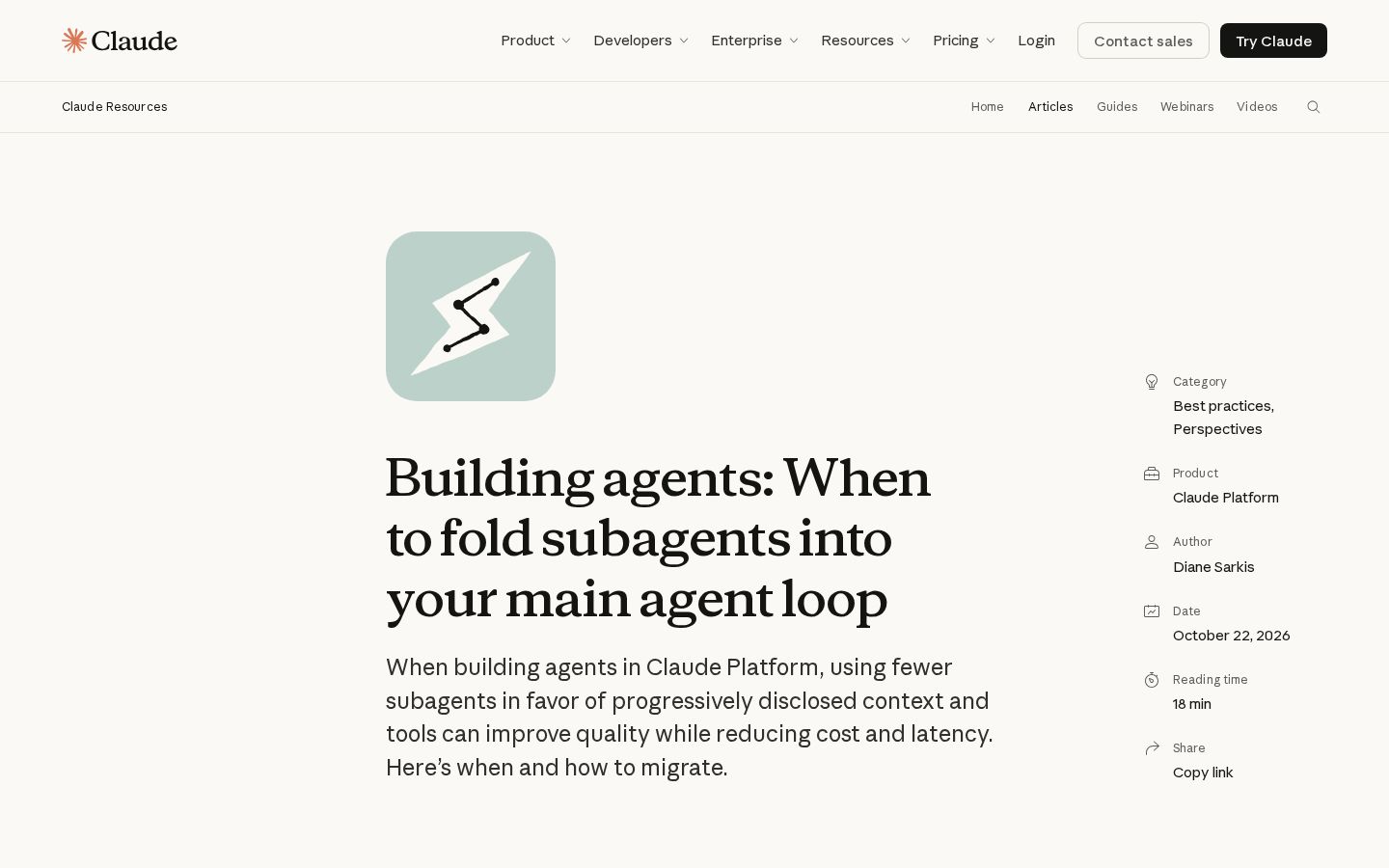
  1. Screenshot of Building agents: When to fold subagents into your main agent loop

    Building agents: When to fold subagents into your main agent loop

    claude.comSaved Oct 24#1

    Anthropic says a single agent with skills frequently outperformed multi-agent designs in several enterprise deployments, often with lower cost and latency. The article explains when to fold subagents into the main loop and offers a migration kit for testing alternatives.

    Why it matters. I spend a lot of time thinking about agents working in parallel, so I appreciate the case for making the default simpler. The useful question is where a separate context window or parallel task actually earns its cost.

  2. Tony @tonycueva

    Part 2 of the evals and tracing guide for engineers, QAs, and PMs who want to test every change to their AI app. After the first eval works, every team I talk to hits a second wall. You find a bug, you fix it, and a few test questions prove the fix. Then someone changes the prompt to fix a different bug. Nobody can say what else that change broke. It happened to us too. In Evals and Tracing 101 , five test questions proved our fix to a shoe store support bot. Then I put the same bot on a live server and asked it 20 questions from its real traffic, 3 times each. It passed 33 of 60. The five…
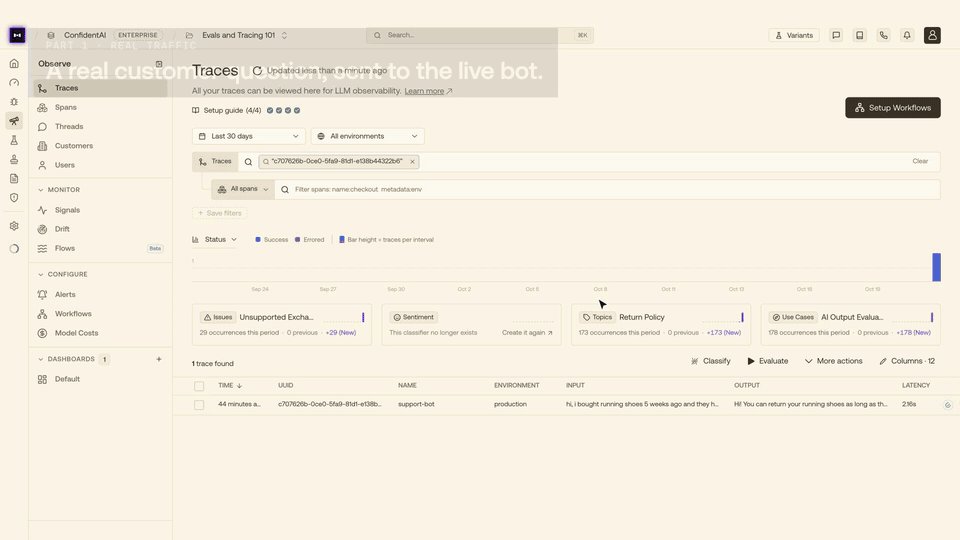
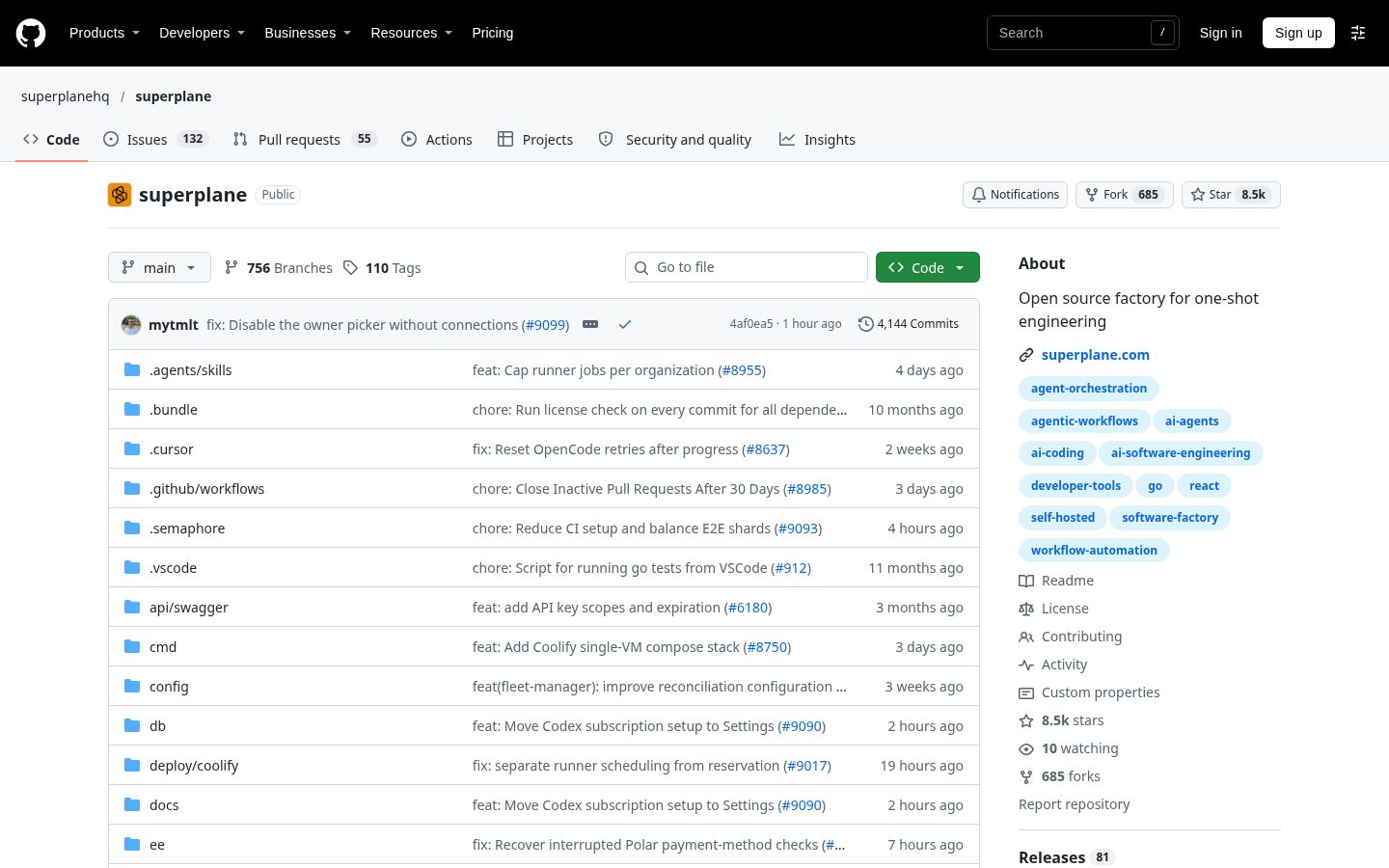
    Image from the post by Tony

    Tony walks through building an eval harness for a live shoe-store support bot, using questions from real traffic and running each three times. His first full run passed 33 of 60 tests, despite passing five questions focused on a known bug.

    Why it matters. A fix that passes the example I had in mind can still break something else. I like the practical approach of turning real failures into repeatable tests and checking which cases changed on each release.

  3. Screenshot of GitHub - superplanehq/superplane: Open source factory for one-shot engineering

    GitHub - superplanehq/superplane: Open source factory for one-shot engineering

    github.comSaved Oct 30#5

    SuperPlane is an Apache 2.0 project that aims to turn well-defined backlog issues into review-ready pull requests. It coordinates coding agents, CI and review, sends failures back for correction, and can run in the cloud or on your own infrastructure.

    Why it matters. This is close to the software factory I'm building, particularly the handoff from a clear issue to evidence a person can review. I'd like to see how it decides which backlog work is ready for an agent.

02

Ruby and Rails

1 bookmark

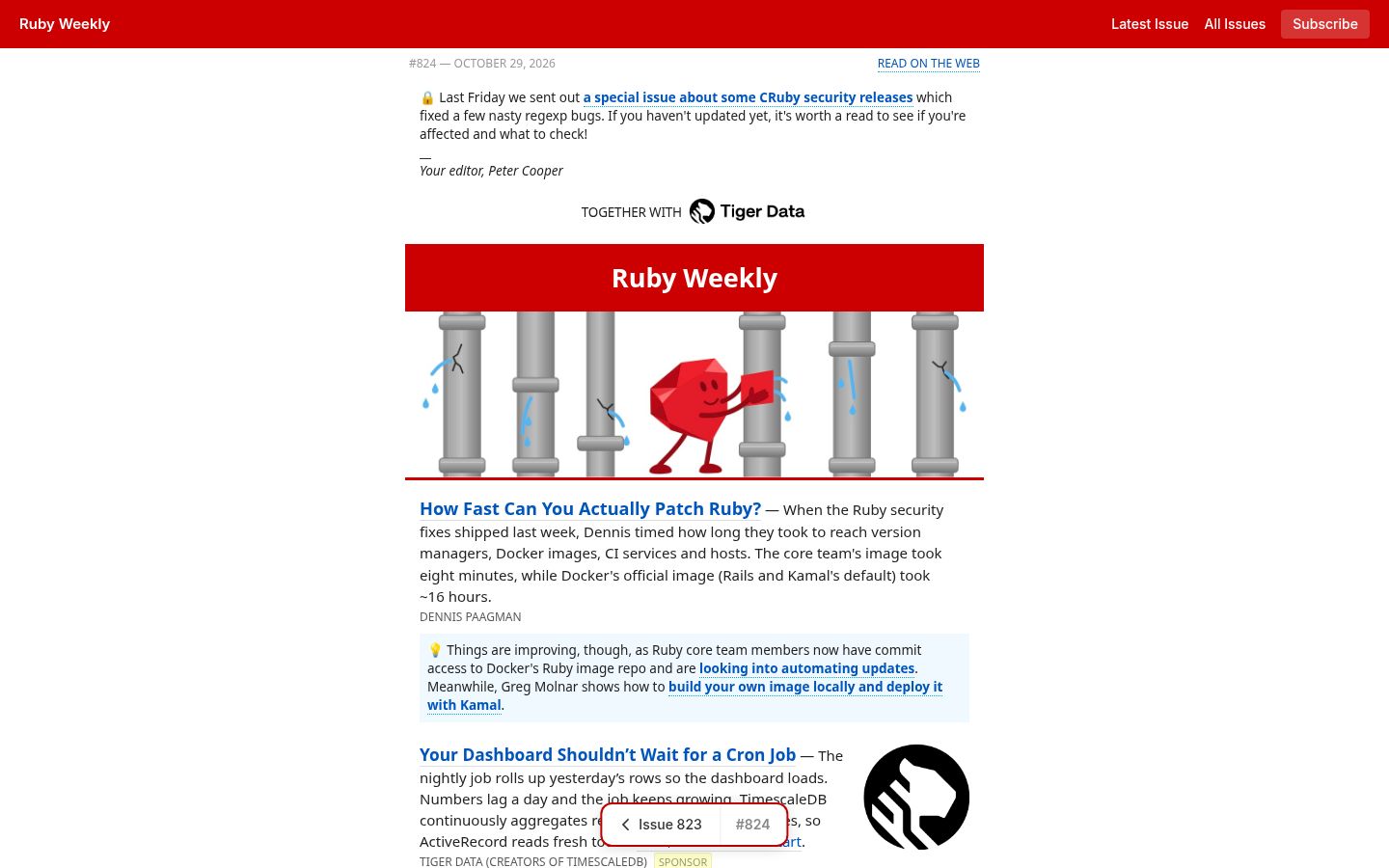
  1. Screenshot of How fast can you actually patch Ruby?

    How fast can you actually patch Ruby?

    rubyweekly.comSaved Oct 29#3

    Ruby Weekly reports Dennis Paagman's timing of recent Ruby security fixes: the Ruby core team's Docker image updated in eight minutes, while Docker's official image took about 16 hours. The issue also links to work on automating updates and building an image locally for Kamal.

    Why it matters. I want to know how quickly a Ruby fix can actually reach a Rails app, not only when the patch was released. The gap between those images is a useful thing to check in your own deployment process.

03

Security, secrets, and infrastructure

1 bookmark

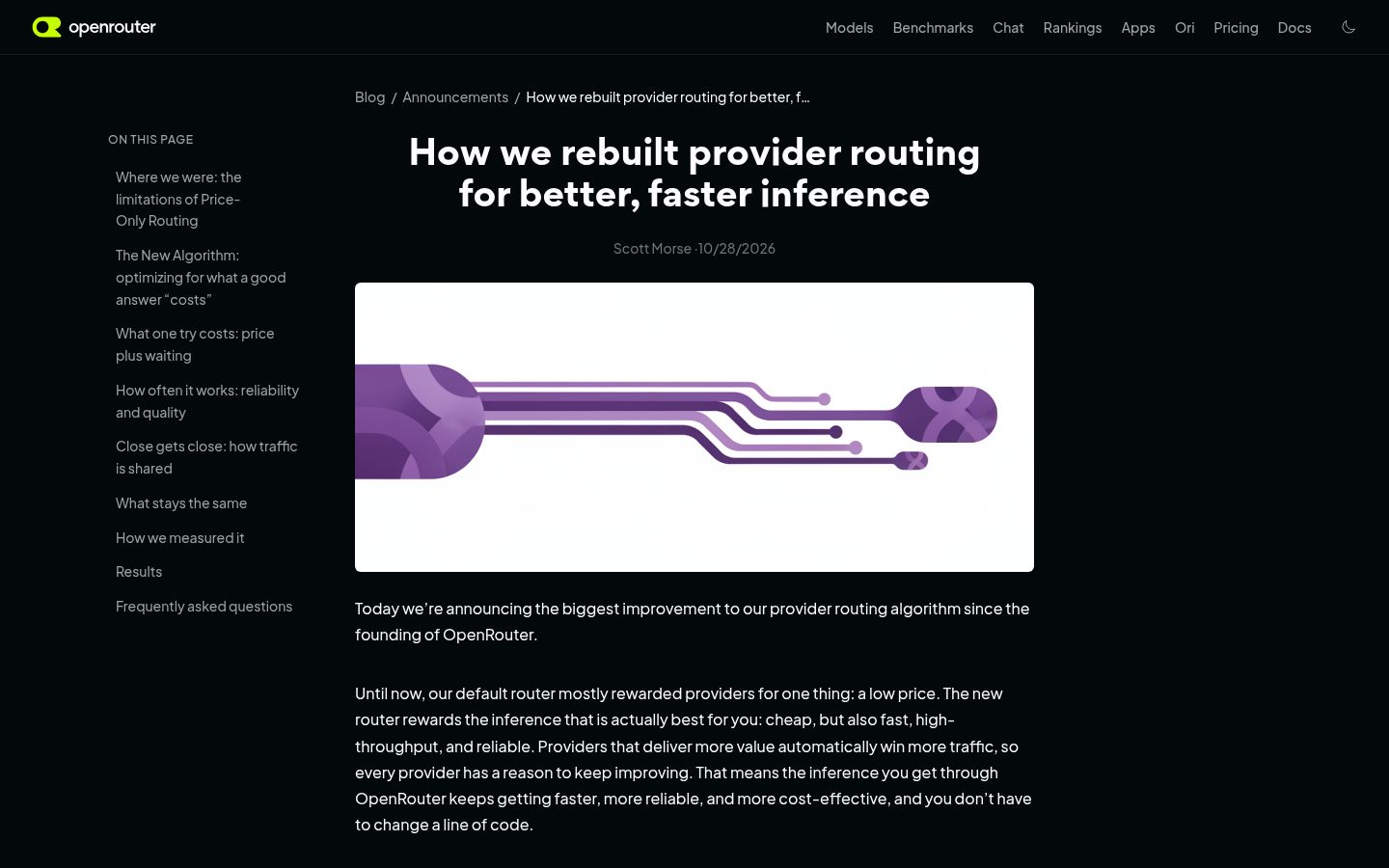
  1. Screenshot of How OpenRouter rebuilt provider routing for better, faster inference

    How OpenRouter rebuilt provider routing for better, faster inference

    openrouter.aiSaved Oct 30#4

    OpenRouter describes a new provider router that weighs effective price against latency, throughput and reliability rather than mostly input-token price. In a switchback experiment, it reports 16.9% faster time to first token and 46% fewer capacity errors, with a 6% cost increase.

    Why it matters. The cheapest token isn't necessarily the cheapest useful answer when a request stalls or needs a retry. I like seeing the tradeoff measured, especially the decision to account for cache hits and output pricing.

04

Tools, craft, and curiosity

3 bookmarks

  1. nateliason @nateliason

    After years of AI promising to handle your writing, it may actually be possible without the output sounding like slop. In one long Claude Code session, starting from an empty repo, I built an AI writing pipeline that turns my rambling recordings into drafts in my voice. And after working through a few rounds of feedback, my edit rate fell to 3% on content that this pipeline produced. Whereas before, AI attempts to write for me always had dead giveaways, these are getting quite good, and for someone less picky about their writing you could hand off 100% of your written output to a process like…

    Nat Eliason describes an AI writing pipeline in which Argon drafts from his source material and Claude judges and requests revisions. He says his edit rate fell to 3% after feedback rounds, and explains how he separates a writing corpus from holdout examples.

    Why it matters. The part I want to steal is having the judge predict my edits before I make them, then comparing the two. That gives me a way to see whether the feedback loop is learning my preferences instead of just producing more drafts.

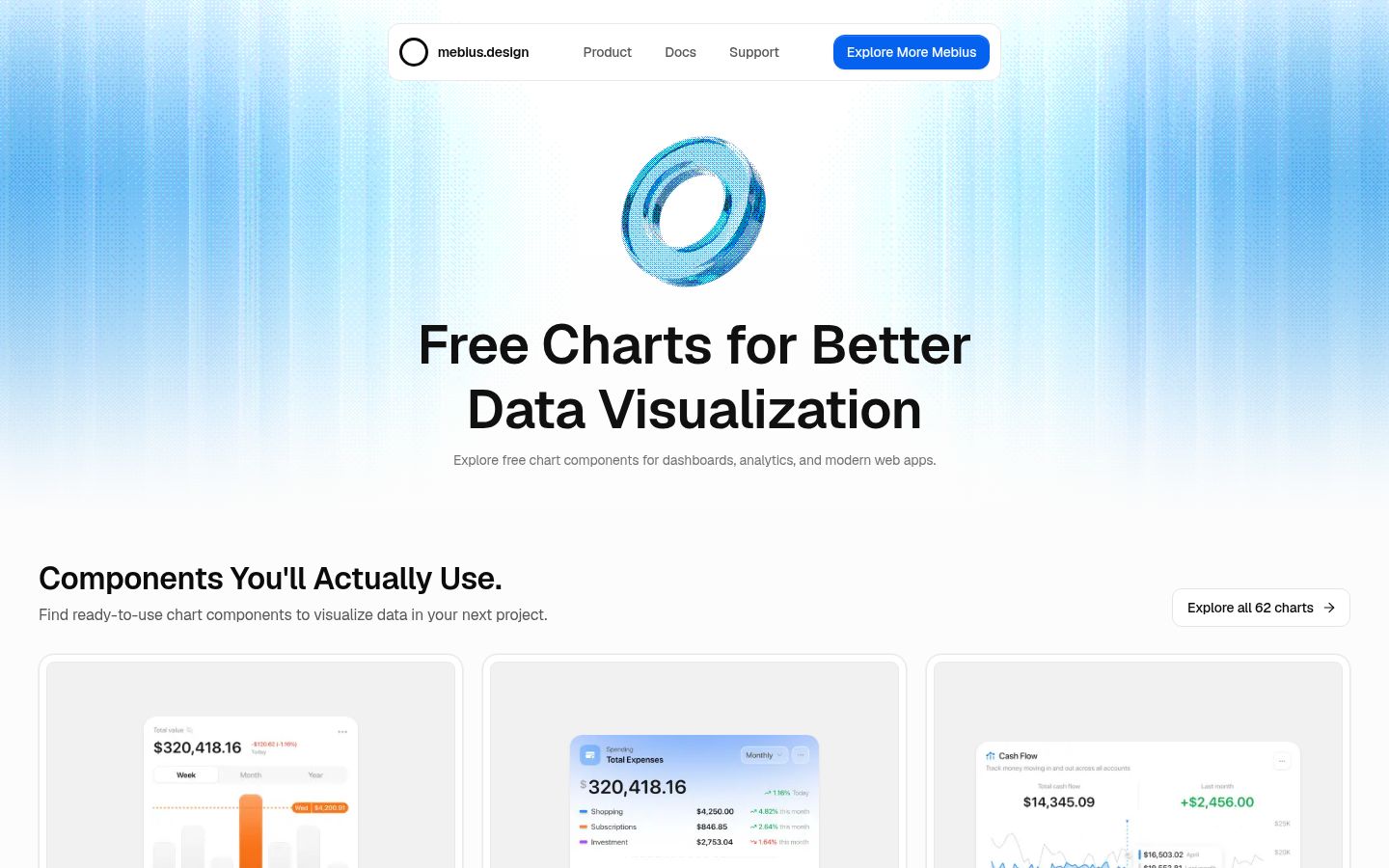
  2. Screenshot of Free Charts for Better Data Visualization · mebius.design

    Free Charts for Better Data Visualization · mebius.design

    mebius.designSaved Oct 29#9

    Mebius offers 62 free chart cards for dashboards and web apps, with a Figma file and animated React, TypeScript and Tailwind code.

    Why it matters. Charts take time to make readable, so I like having examples I can inspect when I'm building a small app. The Figma and code together make this a useful starting point.

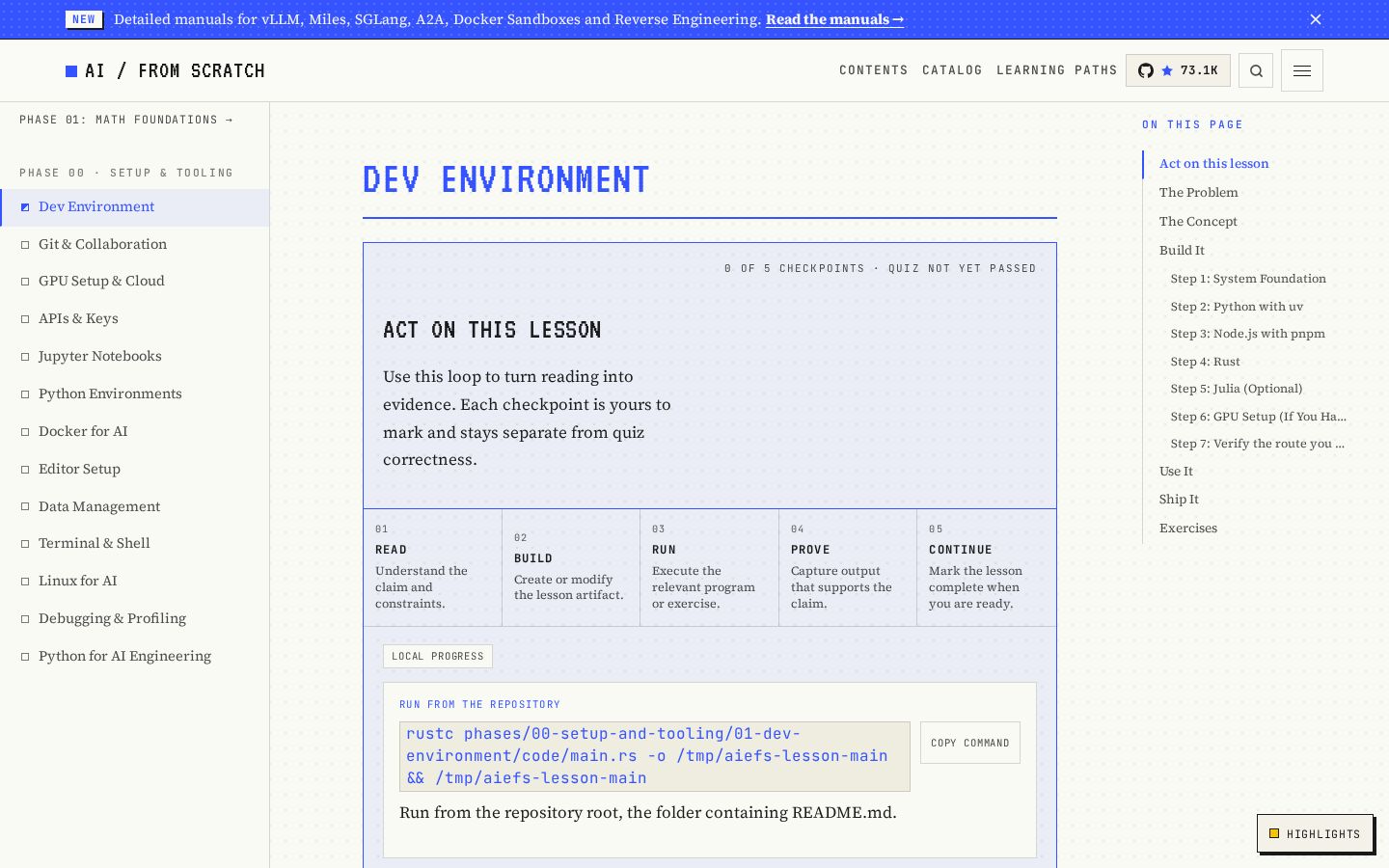
  3. Screenshot of Dev Environment · AI Engineering from Scratch

    Dev Environment · AI Engineering from Scratch

    aiengineeringfromscratch.comSaved Oct 24#10

    AI Engineering from Scratch offers a development environment lesson covering Python, Node.js and Rust, with optional GPU setup and route-specific verification scripts. It organizes the setup into system, package manager, runtime and library layers.

    Why it matters. Environment problems can stop someone before they get to the part they came to learn. I like the bottom-up explanation and the checks for only the learning route a person wants to start.

05

Product, marketing, and growth

2 bookmarks

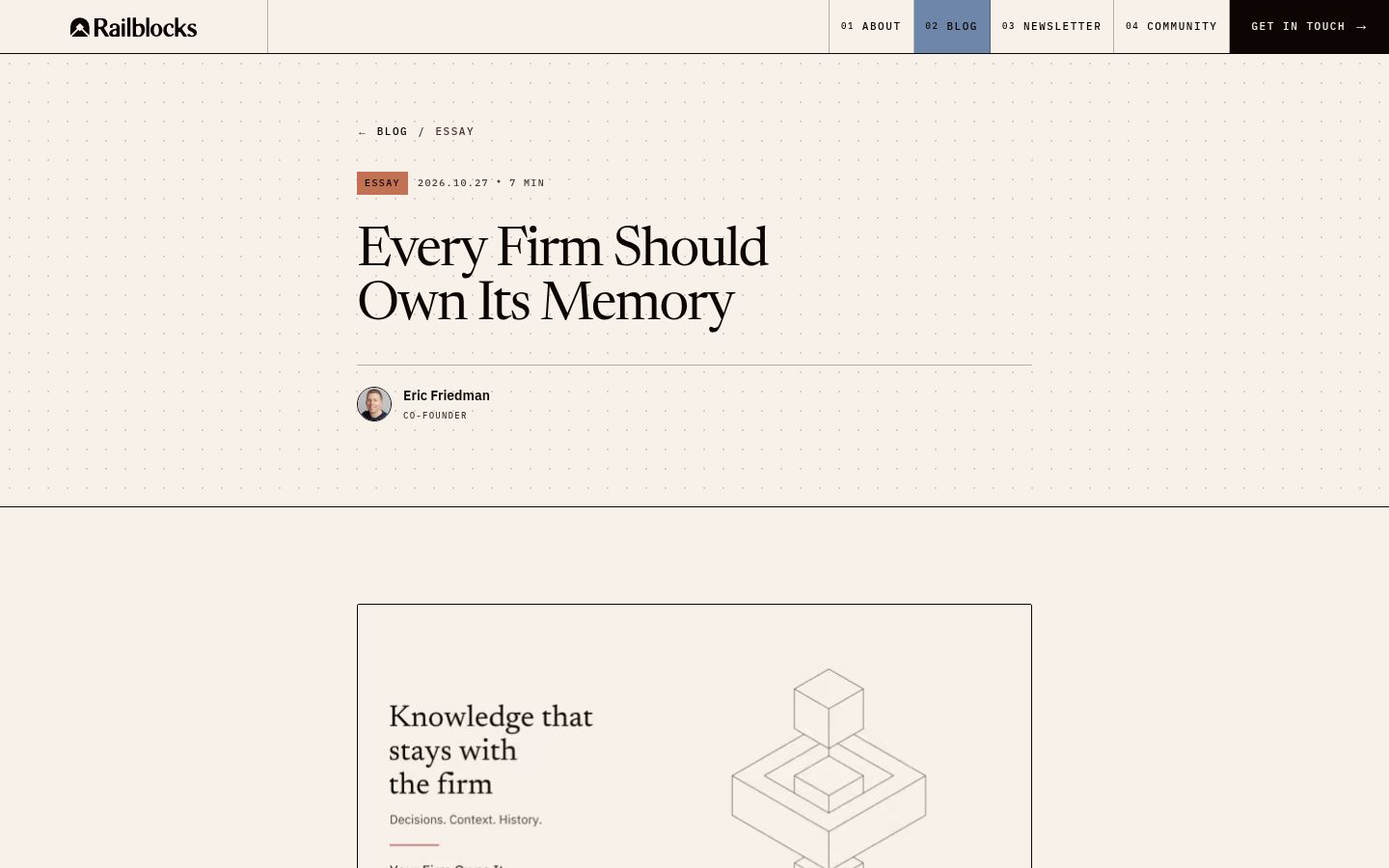
  1. Screenshot of Every Firm Should Own Its Memory ⬩ Railblocks

    Every Firm Should Own Its Memory ⬩ Railblocks

    railblocks.comSaved Oct 29#7

    Eric Friedman argues that investment firms should own portable institutional memory assembled from sources such as email and files. Railblocks proposes building that memory on infrastructure the firm controls, with access for agents through tools such as MCP.

    Why it matters. Investment decisions and the reasoning behind them are useful context that can get scattered across tools. I like the question this raises for products serving firms: can their knowledge move with them when they change software or models?

  2. How to Get AI Agents to Recommend Your Articles

    every.toSaved Oct 27#8

    Mike Taylor tested article headlines in 2,484 simulated agent sessions and found that a more specific title and description increased citation share for one prompt-engineering article from about 35% to 60%. He notes that the experiment did not measure live traffic.

    Why it matters. I keep thinking about what happens when an agent chooses what a person sees. The experiment makes a useful case for saying what an article actually contains, while leaving the real-traffic question open.